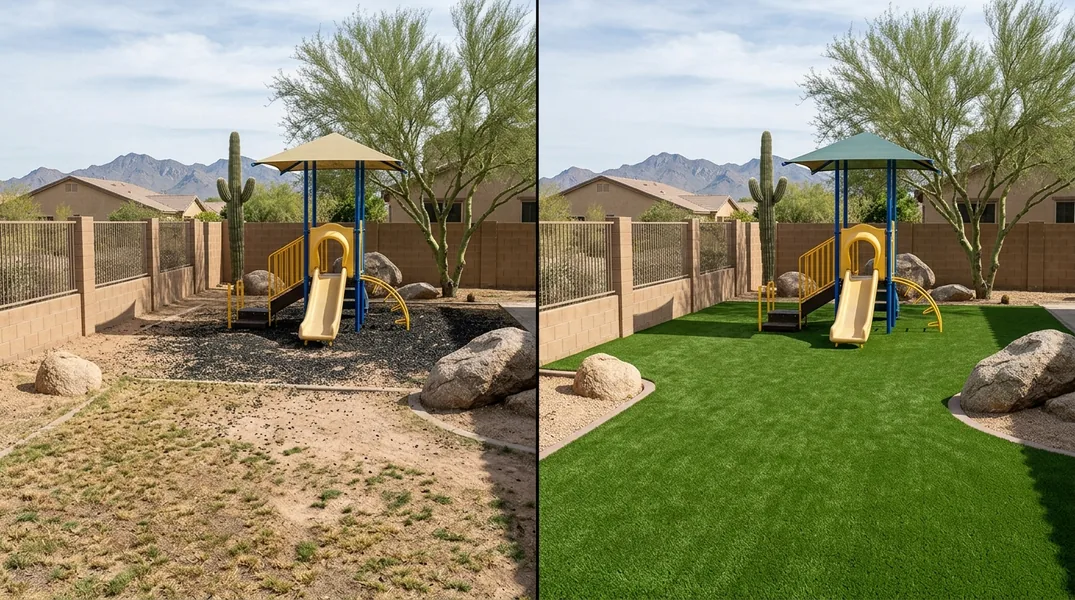
Understanding Caliche and Why It Matters for Artificial Grass Installation
If you own a home in Scottsdale, you've likely encountered caliche, that hard, calcium-carbonate layer that sits just beneath the topsoil. Caliche is practically unavoidable in our desert landscape, and it presents a unique challenge when installing artificial grass. Many homeowners don't realize that caliche can significantly impact the success of their turf installation if it's not properly addressed during the preparation phase.
Caliche acts like a natural concrete barrier, preventing water from draining properly through the soil. This becomes especially problematic during Scottsdale's intense monsoon season when heavy rainfall can saturate your yard in minutes. Without proper planning, water can pool beneath your artificial grass, creating soggy spots, encouraging mold growth, and eventually leading to turf failure. The good news is that with the right approach to artificial grass drainage and base preparation, caliche doesn't have to be a dealbreaker for your new lawn.
What to Put Under Artificial Grass: The Foundation of Success
The foundation beneath your artificial turf is just as important as the turf itself. When we talk about what to put under artificial grass, we're really discussing a layered system designed to manage water, provide stability, and ensure your investment lasts for years. The typical base prep for artificial grass involves removing existing vegetation and topsoil, breaking through or removing caliche, and then installing multiple drainage layers.
The first step is always caliche removal or perforation. Many installers in Scottsdale will use heavy equipment to break up the caliche layer, allowing water to pass through more freely. Once the caliche is addressed, the base should consist of a compacted layer of crushed rock or gravel, typically 4 to 6 inches deep. This layer serves as your primary drainage system, allowing water to flow away from the turf surface and down into the soil below. Over this rock base, you'll add a turf base prep layer, often made of recycled asphalt or specialized base material designed to compact firmly while still allowing water infiltration.
Artificial Grass Underlay: Choosing the Right Material
An artificial grass underlay is the critical barrier between your base preparation and your turf itself. This isn't just any fabric, it's a specialized permeable membrane designed to prevent weeds from growing up through your new lawn while still allowing water to drain through. The quality of your underlay directly affects how well your artificial grass performs, especially in a climate like ours where water management is essential.
When selecting an underlay, look for products that offer superior permeability and durability. High-quality membranes are designed to handle the intense UV exposure and temperature fluctuations that come with desert living. The underlay should be thick enough to resist punctures from sharp rocks or debris, yet porous enough that water drains freely. During monsoon season, a poor-quality underlay can become a liability, trapping water and creating conditions that promote mold and algae growth beneath your turf. This is why investing in premium materials during your Residential Artificial Grass Installation is so important for long-term performance.
Managing Artificial Grass Drainage During Monsoon Season
Monsoon season in Scottsdale brings intense, concentrated rainfall that can dump several inches of water in just a few hours. Proper artificial grass drainage isn't a luxury in our region, it's an absolute necessity. A well-designed drainage system should move water away from the turf surface and either into the surrounding landscape or into a French drain system if your yard's slope doesn't allow for natural water movement.
The drainage strategy begins with the base layers we discussed earlier. The compacted rock and specialized base material work together to create a pathway for water to move downward and away from the turf. However, the surface slope of your lawn is equally important. Your artificial grass should be installed with a slight grade, typically sloping away from structures and toward areas where water can safely disperse. If your yard has low spots or areas where water naturally collects, consider installing a perimeter drain or swale to redirect water away from the turf. Many homeowners are surprised to learn that proper grading during installation prevents 90 percent of drainage-related problems down the road.
For properties with particularly challenging drainage issues, a subsurface drainage system may be necessary. This involves installing perforated drainage pipe beneath the base layers to actively move water away from the turf. While this adds to the initial installation cost, it's a worthwhile investment for yards that experience standing water or have poor natural drainage. The key is addressing these issues during installation rather than trying to fix them after your artificial grass is already in place.
Professional Turf Base Prep Near Me: When to Call the Experts
While some homeowners attempt DIY artificial grass installation, the reality is that proper turf base prep requires specialized knowledge and equipment. Breaking through caliche, calculating proper drainage slopes, and installing multiple layers correctly isn't something you can learn from a YouTube video. This is especially true in Scottsdale, where the unique soil conditions and climate demands expertise.
Professional installers bring experience with hundreds of yards in your area. They understand how caliche varies from property to property, they know the best drainage solutions for different lot configurations, and they have the equipment to do the job right the first time. When you hire Scottsdale Turf Installation for your Residential Artificial Grass Installation, you're getting a team that has perfected these techniques through years of desert landscaping work. We assess your specific site conditions, identify potential drainage challenges, and create a customized installation plan that accounts for monsoon season and long-term performance.
If you're ready to transform your yard with artificial grass, the first step is getting a professional evaluation of your property's base conditions and drainage needs. Contact Scottsdale Turf Installation at (623) 900-1826 to schedule your free estimate. We'll assess your caliche situation, discuss drainage solutions, and provide clear guidance on what to expect during installation.
Long-Term Performance: Protecting Your Investment
Installing artificial grass with proper base preparation and drainage is an investment in years of beauty and functionality. When everything is done correctly, your turf should perform beautifully through multiple monsoon seasons without issues. The key is starting with the right foundation. Poor base prep might save money upfront, but it leads to problems that become expensive to fix later, including turf replacement, drainage retrofitting, or dealing with mold and odor issues.
Maintenance also plays a role in protecting your investment. Regular rinsing during dry months helps keep your turf clean, and ensuring that drainage pathways remain clear prevents water from backing up. Most quality artificial grass installations in Scottsdale come with warranties that cover the turf itself, but those warranties are only valid if the base preparation was done correctly. This is another reason why choosing an experienced, reputable installer matters. When you work with professionals who stand behind their work, you get peace of mind along with your new lawn.
Looking for a professional artificial grass installation company in Scottsdale? Scottsdale Turf Installation responds fast for all your artificial grass installation needs.
Get a Free Quote